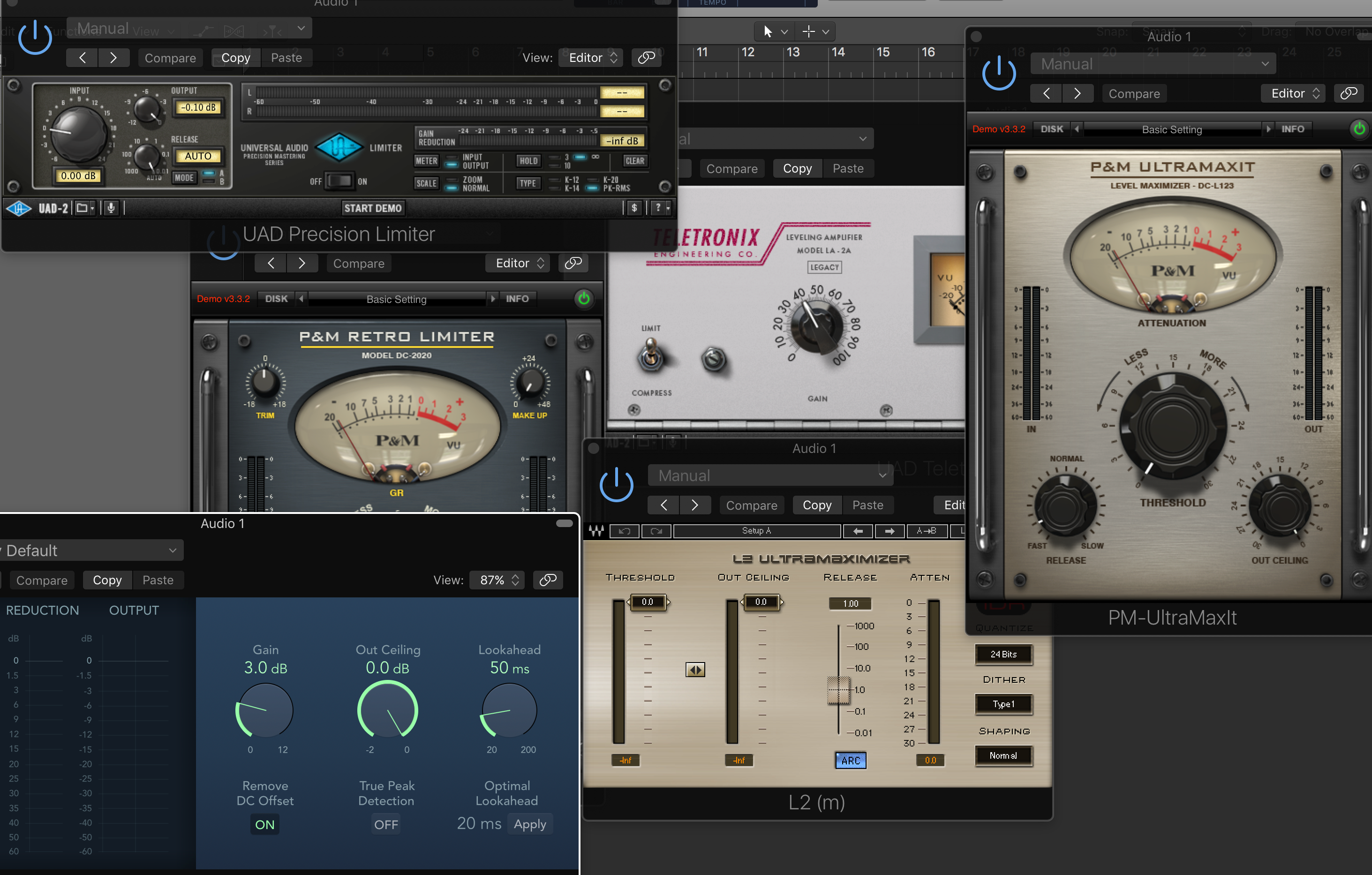

Using Limiters to Shape Groove and Feel
In this installment of the Creative Limiters series, we’re focusing on how limiters influence rhythm and momentum inside a mix. There's some overlap with Part 1, but these are techniques that can be repurposed to a lot of cases.
This isn’t about loudness. It’s about timing, density, and feel.
Why Limiters Feel Different Than Compressors
Compressors react over time. Limiters react instantly.
That speed changes how rhythmic material behaves. A limiter can:
-
Catch peaks without reshaping the envelope too much
-
Lock transient-heavy material together
-
Control density without audible “breathing”
When used subtly, a limiter can make a groove feel more intentional without sounding processed.
1. Tightening a Drum Bus Without Sidechain Tricks
One of the most useful limiter placements in a mix is directly on the drum bus.
Instead of compressing aggressively or setting up sidechain routing, try this:
-
Use a limiter and push it just enough to just catch the transients
-
Set the release to breathe with the tempo, you can do this by ear, or do the math to set the time to correspond with each beat (you can do this a lot, see next technique).
-
Aim for just 1–2 dB of gain reduction on the loudest hits
What happens is subtle but effective. The kick and snare stay punchy, but cymbals, rooms, and percussion stop jumping forward unpredictably. The entire kit starts to feel unified and controlled.
The groove becomes more consistent—not because it’s louder, but because the dynamic contrast is more intentional.
This approach works especially well on:
-
Live drum recordings
-
Layered hip-hop drums
-
Indie and rock productions
-
Percussion-heavy tracks
It’s less obvious than compression and often more stable than a sidechain.
2. Using Release Time to Reinforce Tempo
Limiter release time can act like a rhythmic parameter.
If the release is too fast, the limiter recovers instantly and feels invisible. If it’s too slow, the track can feel flat. But when the release sits in the pocket of the tempo, something interesting happens, the limiter resets in time with the groove.
This creates subtle motion without obvious pumping.
Try this on:
-
Drum loops
-
Percussion buses
-
Rhythmic synths
-
Guitar strums
Dial the release so gain reduction returns to zero right before the next major hit. When it’s right, the track feels tighter and more intentional—even though nothing obvious changed.
3. Micro-Pumping That Feels Musical
Sidechain compression is often used to create movement, but it can be too obvious for some genres.
A limiter with a longer release can create a softer, more transparent version of that effect. When transients hit the ceiling, the rest of the material briefly tucks in. As the limiter releases, the track breathes back up.
This can add motion without the “EDM pump.”
It works well on:
-
Lo-fi and alternative production
-
Cinematic pop
-
Ambient rhythms
-
Subtle groove enhancement on buses
The goal isn’t to hear the limiter working. It’s to feel the track settle into a consistent rhythmic shape.
4. Keeping Percussion Layers From Fighting Each Other
Layered percussion can create groove—but also chaos. Shakers, claps, tambourines, and loops often compete for attention.
A gentle limiter on a percussion bus can solve this quickly:
-
Fast attack
-
Medium release
-
Only catching peaks
Instead of individual hits jumping forward, the entire percussion section feels like a single instrument. The groove becomes easier to read because nothing sticks out randomly.
This approach is especially helpful when layering:
-
Multiple claps or snaps
-
Acoustic percussion stacks
-
Loop-based arrangements
It keeps energy without letting the groove become cluttered.
5. Limiter vs. Compressor for Fast Material
On very fast transients—tight hi-hats, glitch percussion, fast guitar picking—compressors can sometimes feel too slow or too obvious. A limiter can act more like a peak stabilizer.
Placed carefully, it keeps sharp hits from jumping forward without changing the character of the performance.
Use it when:
-
Compression feels too pumpy
-
Transients are already strong
-
You just need consistency
The limiter becomes less of a tone shaper and more of a timing stabilizer.
A Subtle but Powerful Tool
Limiters are often associated with mastering, but their role inside a mix can be much more musical. When used lightly, they can:
-
Reinforce groove
-
Stabilize rhythm
-
Control density
-
Keep performances consistent
They don’t replace compression or sidechain. They sit alongside them—often doing the final bit of work that makes a track feel locked in.
Try This Tonight
Take a drum bus or percussion loop and:
-
Add a limiter
-
Set the ceiling normally
-
Push input until you see 1–2 dB of gain reduction
-
Adjust release to match the tempo
Bypass it a few times.
You’ll probably notice the track feels more focused and intentional with the limiter on—even though it isn’t louder.
That’s the sound of groove being shaped, not volume being raised.