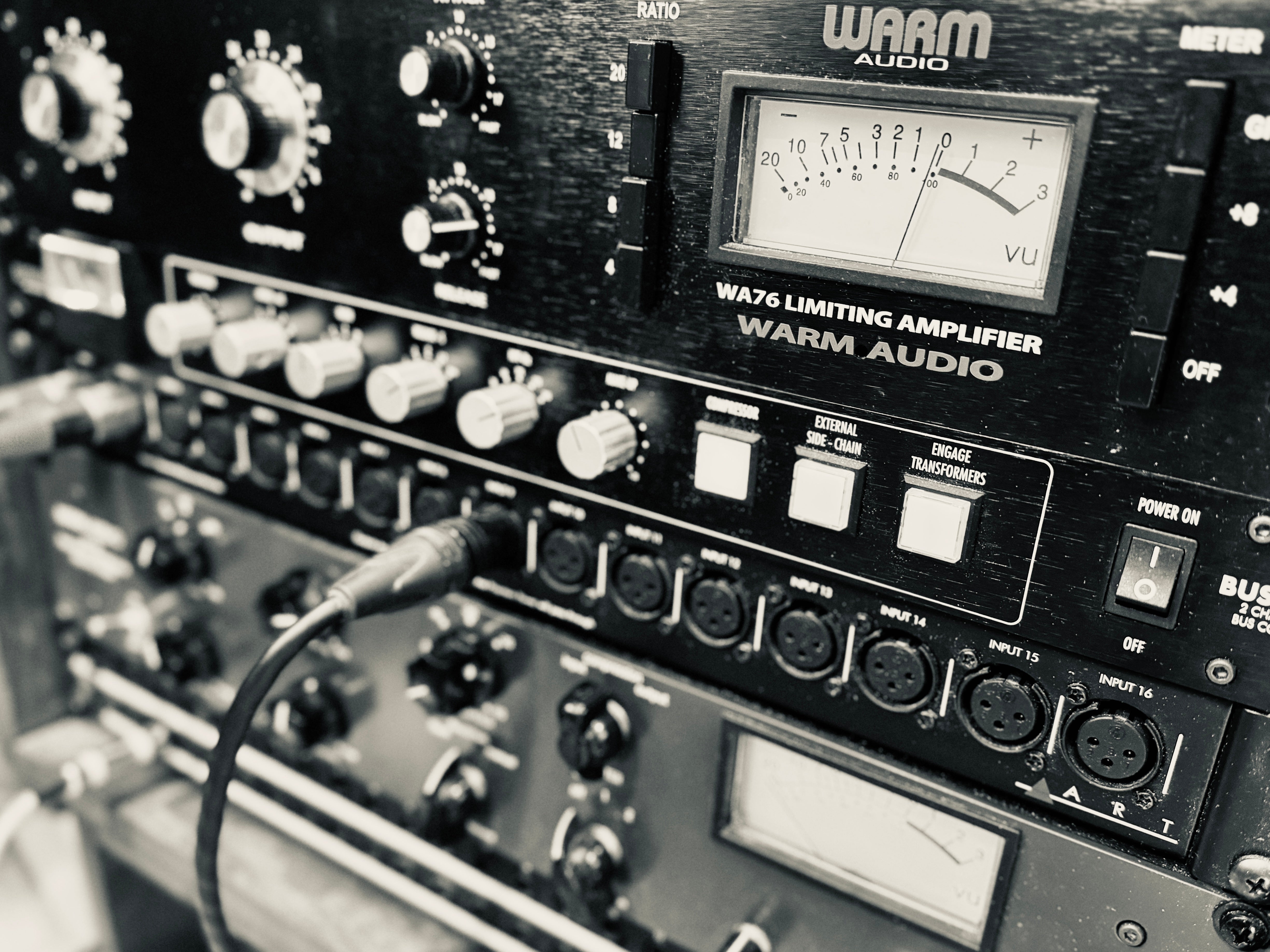

Ask any seasoned engineer what separates a muddy, lifeless mix from one that breathes and punches, and they'll likely point to something invisible: the gain structure. Not the plugins, not the console brand, not the microphone. The gain. Specifically, how carefully each stage of the signal chain is fed just the right amount of signal — enough to be meaningful, not so much that it overloads what comes next.
It sounds simple. It isn't. Or rather, it is simple in principle and endlessly nuanced in practice. This is the skill that rewards patience, and the one most people overlook entirely.
What Gain Staging Actually Is
Gain staging refers to the practice of managing signal levels at every point in an audio signal chain — from microphone preamp to plugin chain to bus to master output. The goal is to ensure that the signal passing through each stage is operating in that stage's optimal dynamic range: loud enough to have a strong signal-to-noise ratio, quiet enough to avoid clipping and distortion.
In the analog world, this meant driving a console's channel strip into the right part of its transformer and circuitry. Too little signal and you'd hear tape hiss rising to the foreground; too much and the transformer would saturate. In the digital world, the concept persists but the stakes shift — digital audio doesn't gradually degrade as you approach maximum level. It works perfectly right up until the moment it doesn't, at which point you get hard clipping.

Why It Matters More Than You Think
Signal-to-Noise Ratio
Every piece of audio equipment — hardware or software — introduces some amount of noise. When you record at too low a level and then boost in the mix, you're boosting everything, including the noise. Gain stage correctly at the source and you capture the signal far above the noise floor where it belongs.
Plugin Behavior
Many plugins — particularly emulations of analog hardware — are calibrated to behave correctly at specific input levels. Drive a compressor plugin with a signal that's 10 dB hotter than it expects and you'll get aggressive, unexpected behavior that no amount of threshold adjustment will fully correct. Gain staging isn't just about preventing clipping — it's about ensuring every tool in your chain does exactly what you intend.
Headroom and Dynamics
When individual tracks are already peaking near 0 dBFS before you've added any processing, you have nowhere to go. Transients — the initial attack of a snare, a picked guitar string, a consonant in a vocal — routinely exceed the average RMS level by 10 to 20 dB. If your average level sits at −2 dBFS, those transients are clipping. Every one of them.

The −18 dBFS Rule Set your input gain so that the average (RMS) level of recorded tracks sits around −18 dBFS. This aligns with the analog "0 VU" reference used by professional studios for decades, and gives you roughly 18 dB of headroom above your average signal for transients and plugin processing. This isn't a hard law — some engineers prefer −14 or −20 — but it's a sensible, well-reasoned starting point.
The Stages You Need to Manage
1. The Preamp
The first and most consequential gain decision. Set your preamp gain so that loud passages hit somewhere between −12 and −6 dBFS on your interface's level meter. Leave room. You can't un-clip a recording, but you can always boost a clean one in the mix.
2. The DAW Track Fader
Resist the urge to immediately reach for the fader when a track feels too loud. Ask first: is the problem the fader, or the clip gain? The fader should be reserved for mixing decisions — balancing tracks, automation, blend. Use clip gain or trim to set the raw level of recorded material before it reaches the fader.
3. Plugin Input and Output Gain
Every plugin you insert is a new stage in the chain. The signal arriving at a compressor should be at an appropriate level for that compressor's calibration. The signal leaving it should match the original level unless you're intentionally using gain for effect. Many plugins include input and output gain knobs specifically for this purpose. Use them.
4. The Mix Bus and Master Bus
By the time your signal reaches the mix bus, the cumulative effect of dozens of tracks summing together can push levels far beyond where any individual track peaked. Leave 3 to 6 dB of headroom on your master output before handing it to a mastering engineer. If mastering yourself, even more.
The mix doesn't start when you reach for the fader. It starts the moment the signal enters the system — and every decision from that point either preserves your options or quietly takes them away.
Common Mistakes — and How to Avoid Them
Mixing with your faders too high
It's tempting to push faders up so your mix "sounds loud" during the session. Resist. A mix that sounds loud because the faders are maxed out is a mix that has run out of room to improve. Your mix faders should start at unity (0 dB) or below, not straining toward the ceiling.
Ignoring gain changes after adding plugins
A compressor reducing gain by 6 dB with makeup gain bringing the output back to the input level sounds and behaves very differently than the same compressor with makeup gain set incorrectly. Every time you add a dynamics processor, check the output. Level-match your A/B comparisons. What sounds "better" when louder is not necessarily better — it's just louder.
Recording too quietly "just to be safe"
Recording at −30 dBFS because you're terrified of clipping is an overcorrection with real sonic costs. You're using a fraction of your converters' dynamic range and every subsequent boost in the mix amplifies the thermal noise of your recording chain. Aim for a healthy level.
Quick Gain Staging Checklist
Before recording: Set preamp so peaks land between −12 and −6 dBFS. Test with the loudest expected passage.
Before mixing: Use clip gain to normalize tracks to consistent levels. Start faders at unity.
During mixing: Check levels in and out of every plugin. Aim for mix bus peaks no higher than −6 dBFS.
Before delivery: Ensure master output has 3+ dB of true peak headroom. Leave the limiting to mastering.
Developing the Habit
Here's the uncomfortable truth: gain staging isn't a technique you apply once and forget. It's a discipline — a constant, low-level awareness of signal levels throughout every session. Experienced engineers check their meters reflexively, the same way a skilled driver checks mirrors. It becomes automatic.
Start simple. Pick one project. Set a rule: no individual track peaks above −6 dBFS before any processing. Set a second rule: your mix bus stays below −6 dBFS at all times. Work the whole session within those constraints. Notice how differently your compressors respond. Notice how much more headroom you have to work with.
Then do it again. And again. After a few dozen sessions, you won't need to think about it. Your hands will set preamp gain correctly because they've done it enough times that doing it wrong will feel off. That's the goal: not conscious application of rules, but internalized craft.
The engineers whose mixes you admire are not working with better tools. They're working with the same floating-point math, the same basic physics of transducers and converters. What they have is a relationship with gain that took years to develop, and a discipline that keeps them honest session after session.
It's yours to develop. Start with the levels. Everything else follows.